24/7 Phone Services

-
-
Visit Our Place
NY 11209, United States
Preloader Close
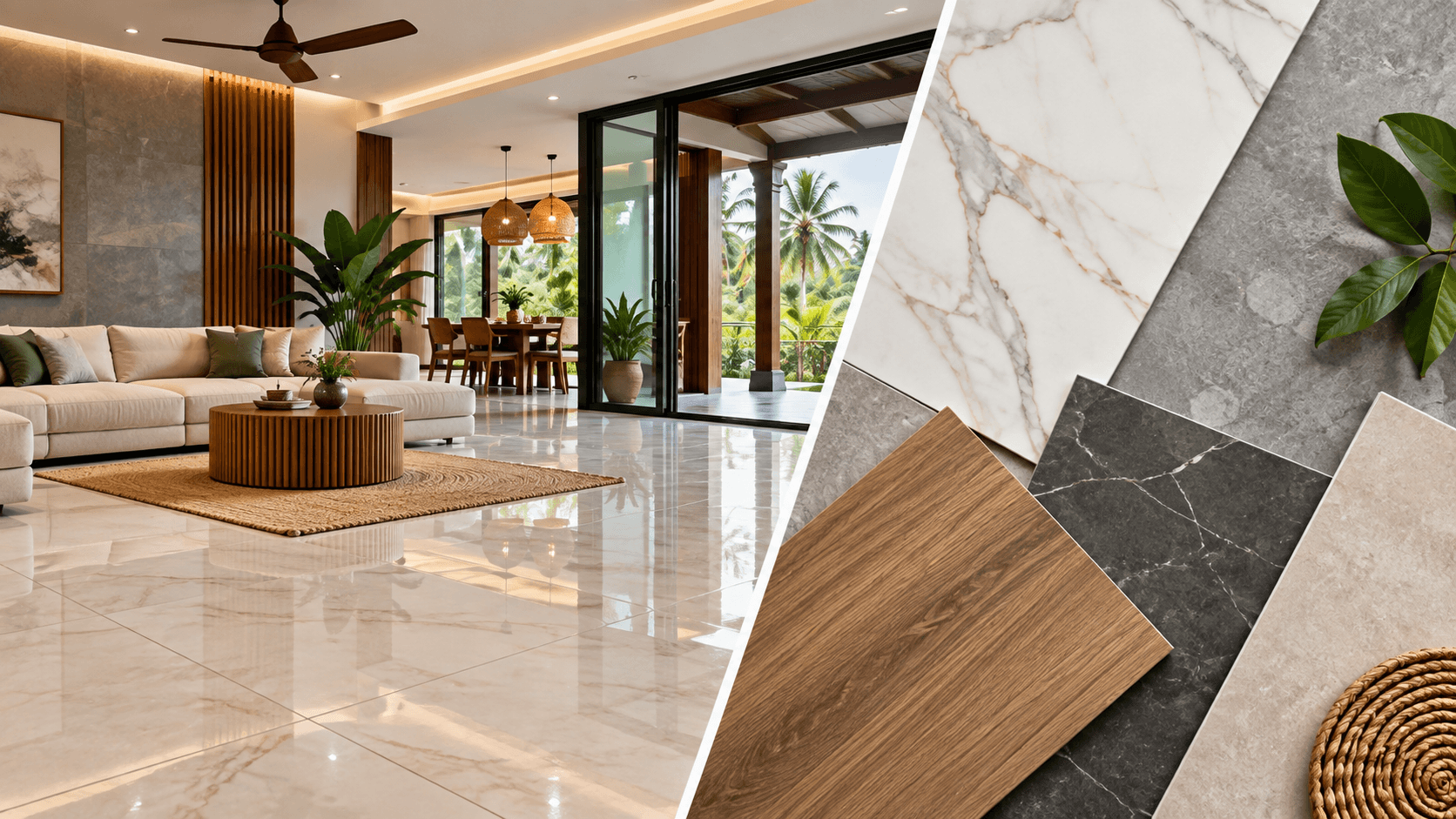
Material Classes for Contemporary Tropical Architecture
Kerala experiences torrential monsoons and sticky air with humidity levels averaging eighty percent annually. This intense weather dictates the choice of building supplies. Finding the best floor tiles for modern homes in Kerala requires balancing visual style with moisture resistance.
This guide lays out concrete details and styles to help you choose ideal flooring for regional homes.
Homeowners favor vitrified tiles because of how they are made. High-pressure dust pressing and high-heat firing fuse silica and clay into a dense, glass-like block.
This intense manufacturing yields a water absorption rate under 0.5 percent. Dampness cannot easily warp or ruin these surfaces.
When evaluating the best floor tiles for modern homes in Kerala, double-charged options stand out. These contain a dual-layer pigment design where the upper wear layer is three to four millimeters thick. This thick surface layer prevents patterns from wearing down under heavy foot traffic.
They remain shiny for decades with basic cleaning.
Natural granite offers a tough, cooling alternative. Its tight crystalline structure blocks water once sealed correctly. It stays cold underfoot, helping cool down rooms during scorching summers.
Key Standards for the Best Floor Tiles for Modern Homes in Kerala
Tropical flooring must satisfy tough safety benchmarks. High humidity deposits condensation on slick surfaces, creating slip hazards. Learning these specs helps you pick the best floor tiles for modern homes in Kerala.
Texture dictates how safe your family stays. Slip resistance relies on the R-value scale, which spans from R9 up to R13. Homeowners need different ratings depending on how wet a room gets.
| Slip Resistance Rating | Recommended Areas | Moisture Exposure Level |
|---|---|---|
| R9 Rating | Dry living rooms and bedrooms | Minimal moisture accumulation |
| R10 Rating | Kitchens and hallways | Occasional water spills |
| R11 to R12 Rating | Bathrooms, sit-outs, and open balconies | Heavy exposure to monsoon rains |
People often favor vitrified blocks for regional flooring because they lack pores and resist fungus. Mold and mildew multiply in damp air, but non-porous surfaces stop spores from taking hold. Simple washing with neutral cleaners keeps them spotless.
Visual Trends in Modern Kerala Interior Design
Today’s homes in the state favor open layouts, lofty ceilings, and smooth indoor-outdoor flow. Big slabs measuring 800 by 1600 millimeters or 1200 by 2400 millimeters are standard in sitting rooms. These large dimensions reduce grout lines, creating a continuous look across the floor.
Natural stone is a luxury pick, positioning granite as one of the premier choices for local family rooms. Sourcing from nearby quarries cuts down transit costs. Polished granite slabs bounce natural light into dark corners.
Wood-look porcelain planks provide the warmth of timber without the threat of termites or rot. Classic regional architecture used wood, but dampness causes timber to warp and swell. For those who love the look of teak but fear moisture, porcelain planks are often considered the best floor tiles for modern homes in Kerala.
- Teak Finish Planks: Great for studies, home libraries, and feature walls.
- Light Ash Wood Tones: Perfect for a simple, Nordic-style look.
- Distressed Timber Textures: Good for outdoor-adjacent areas like covered verandahs.
Choosing Specific Tiles for Every Room
Every room serves a specific purpose and faces different wear. Kitchen floors need to withstand acid spills, heavy drops, and constant foot traffic. Putting the same floor tile everywhere leads to early damage in busy areas.
Matte surfaces prevent slipping, making them excellent tile options for local bathrooms. For safety, matte vitrified pieces rank among the best floor tiles for modern homes in Kerala for wet areas. Shiny tiles get dangerously slick when wet, creating a hazard in showers.
Textured and rustic finishes offer grip while hiding hard water stains.
Living rooms require bright floors that make the space feel huge. Large slabs cut down on joints and represent the best floor tiles for modern homes in Kerala seeking a clean, uncluttered style. Light beige, ivory, and soft grey reflect daylight, saving electricity.
Rough-textured vitrified tiles work best for open sit-outs. These zones lead straight to the garden, getting soaked by rain. Picking tiles with high friction prevents falls during the monsoon months.
Installation Guidelines and Maintenance Strategies
How long your floor lasts depends on how well it is laid. Old-school sand and cement mixtures fail when temperatures shift. Modern setups use modified polymer glues to secure a tight bond.
Spacer joints of at least two millimeters keep tiles from cracking as the house shifts. Epoxy grout is a must instead of cement in kitchens and baths. Epoxy blocks water, resists stains, and stops black mold from growing in the gaps.
- Preparation: Make sure the subfloor is flat, clean, and dry for at least 28 days.
- Glue Spread: Use a notched trowel to butter both the floor and the back of the tile.
- Grouting: Apply epoxy grout 24 hours after laying, washing off residue quickly.
Keeping these floors clean takes little work but needs routine care. Avoid strong acid washes that eat away at glaze or strip stone sealants. Microfiber mops and warm water with mild soap handle daily dirt easily.
Conclusion
Flooring for tropical houses demands careful selection to match local weather, wetness, and style. Heavy-duty vitrified blocks, tough granite, and water-resistant porcelain planks offer great protection against damp weather. Choosing the best floor tiles for modern homes in Kerala guarantees lasting strength and visual appeal.